Why is engineering plastic used in the production of plastic toolboxes
The plastic toolbox is made of engineering plastics because the comprehensive performance of engineering plastics matches the core requirements of "protection, durability, and portability" of the toolbox. It can solve the shortcomings of ordinary plastics (such as polyethylene and polypropylene) in strength, weather resistance, etc. The specific advantages are as follows:
The plastic toolbox is made of engineering plastics because the comprehensive performance of engineering plastics matches the core requirements of "protection, durability, and portability" of the toolbox. It can solve the shortcomings of ordinary plastics (such as polyethylene and polypropylene) in strength, weather resistance, etc. The specific advantages are as follows:
1. Excellent mechanical performance, meeting the core requirements of "protective tools"
Engineering plastics (such as ABS, PPO, PA66) have higher impact strength, rigidity, and wear resistance:
Impact resistance: When impacted or dropped (such as accidentally dropping a toolbox during transportation), it can cushion the impact force, is not easy to crack or deform, and avoids damage to internal tools, far superior to the brittleness of ordinary plastics.
High rigidity: When tools (such as wrenches, screwdrivers, and other metal parts) are stored for a long time, the box is not easily dented or deformed due to load-bearing, maintaining structural stability.
Wear resistance: The surface and edges of the box are not easily scratched or worn during daily friction (such as dragging on the ground or stacking), extending its service life.
2. Strong weather resistance and environmental adaptability, suitable for use in multiple scenarios
Toolbox often needs to be used in complex environments such as outdoors and workshops, and engineering plastics can resist various environmental factors:
High and low temperature resistance: able to maintain stable performance within a wide temperature range (such as -40 ℃~120 ℃, depending on the material), avoiding softening after summer exposure and brittle cracking at low temperatures in winter, suitable for outdoor operations and high-temperature environments in workshops.
Chemical corrosion resistance: It can withstand engine oil, lubricants, weak solvents, etc. that come into contact with tools during maintenance. The surface of the box is not easily corroded or swollen, maintaining its appearance and structural integrity, while ordinary plastics are easily corroded by chemical substances.
3. Good formability, balancing complex structure and lightweight design
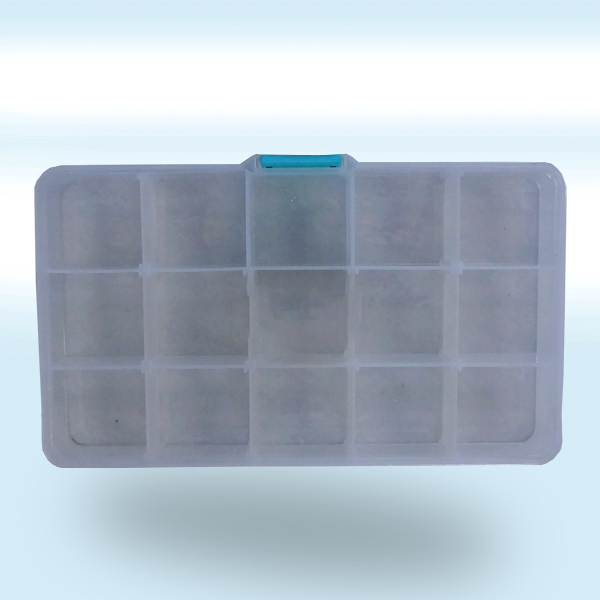
Easy to process: Engineering plastics can be processed through injection molding technology to produce complex structures such as compartments, buckles, handles, and locks in one go, without the need for multiple subsequent splicing. It has high production efficiency and can control dimensions (such as adapting to different tools for compartment spacing).
Lightweight: Compared to metal toolboxes, engineering plastics have a lower density (such as ABS density of about 1.05g/cm 3, much lower than steel's 7.85g/cm 3), which significantly reduces the weight of the box while ensuring strength, making it easier to carry and transport.
4. High cost-effectiveness, balancing performance and cost
Cost controllable: Although the unit price of engineering plastics is higher than that of ordinary plastics, integrated injection molding can reduce processing costs and have a much longer service life than ordinary plastic toolboxes, resulting in lower long-term usage costs.
No need for additional processing: Engineering plastics themselves have certain corrosion resistance and surface smoothness, and do not require painting or rust prevention treatment like metal boxes, reducing production processes and maintenance costs in the later stage.




 Home
Home
 Product
 Wechat
 Telephone